What is OI Agents
What is OI Agents
OI Agents is a modular platform for building intelligent, AI-native applications using agentic workflows and retrieval-augmented generation (RAG). It enables organizations to design and deploy autonomous agents that coordinate tools, data, and logic to perform complex tasks—securely and at scale.
The platform brings structure and reliability to enterprise AI initiatives, with features for visual workflow composition, task routing, external system integration, and observability. It is purpose-built to help teams operationalize AI across functions without sacrificing transparency or control.
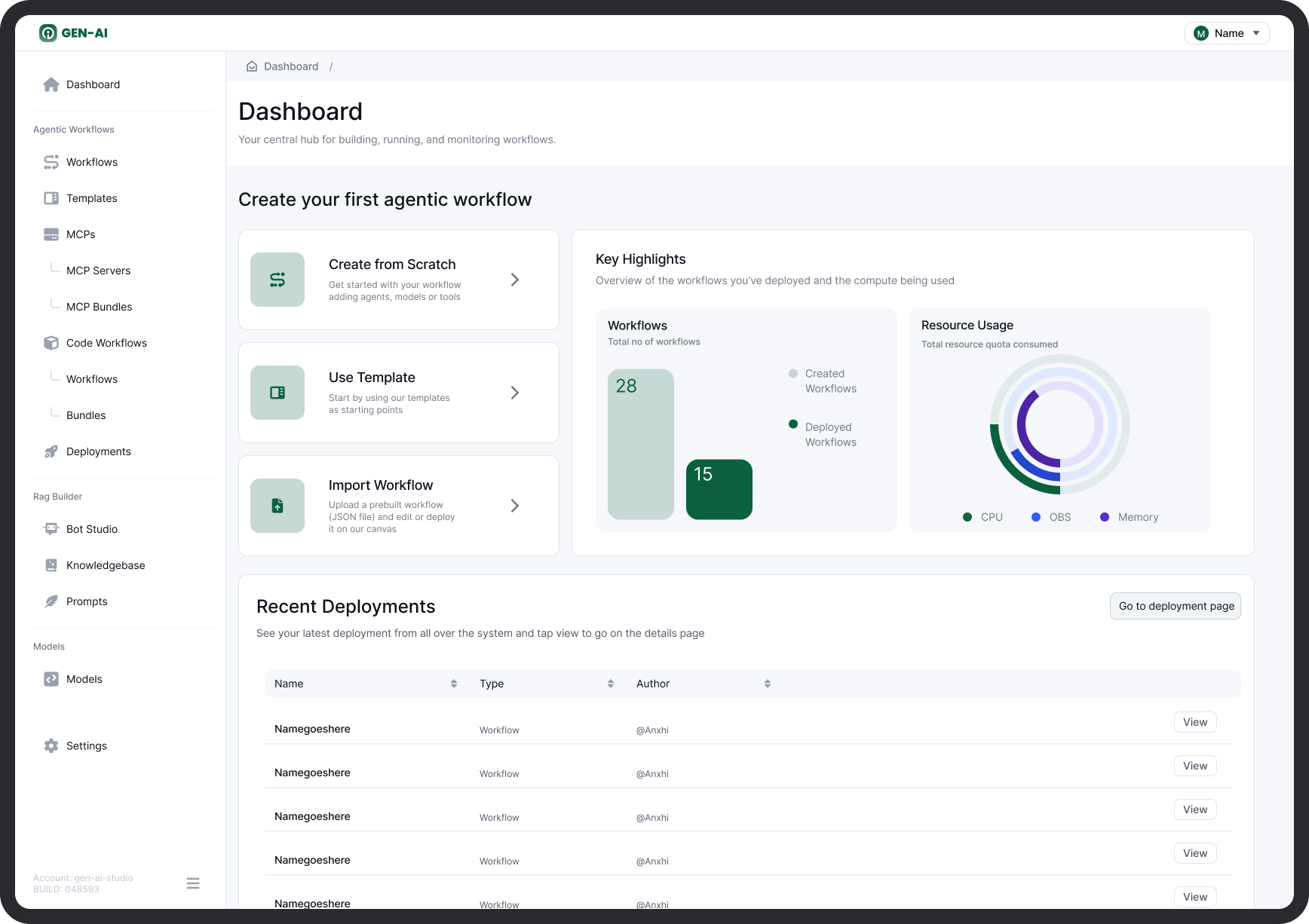
Key Capabilities
- Agentic Workflows: Design multi-step, multi-agent workflows that can reason, act, and collaborate. Workflows are composed of reusable agents, tools, and tasks, which can be visually orchestrated or configured programmatically.
- RAG Builder: Combine AI reasoning with domain-specific context by integrating internal documents, knowledge bases, and APIs. The OI Agents supports the entire RAG lifecycle—from prompt tuning and KB management to deployment and evaluation.
Who It's For
- Business Teams can use no-code tools and pre-built templates to automate workflows across customer support, finance, legal, HR, and more.
- Developers and ML Engineers can compose custom agents, plug in external systems via APIs or Model Context Protocol (MCP), and configure memory, logic, and fallback strategies.
Example Use Cases
Customer Support
Deploy multi-agent assistants that classify tickets, retrieve internal documentation, draft responses, and escalate edge cases with human-in-the-loop handoff.
Legal & Compliance
Automate contract review workflows with agents that extract clauses, check for policy violations, and route documents to reviewers based on risk level.
Sales & Revenue Ops
Use agents to monitor CRM data, identify pipeline risks, generate QBR summaries, or surface real-time revenue insights from fragmented systems.
Healthcare & Life Sciences
Build assistants for clinical note summarization, medical literature search, or intake triage—combining structured retrieval with domain-safe reasoning.
IT & Engineering
Automate triage of bug reports, surface relevant changelogs, or deploy agents that assist with environment setup and code documentation.